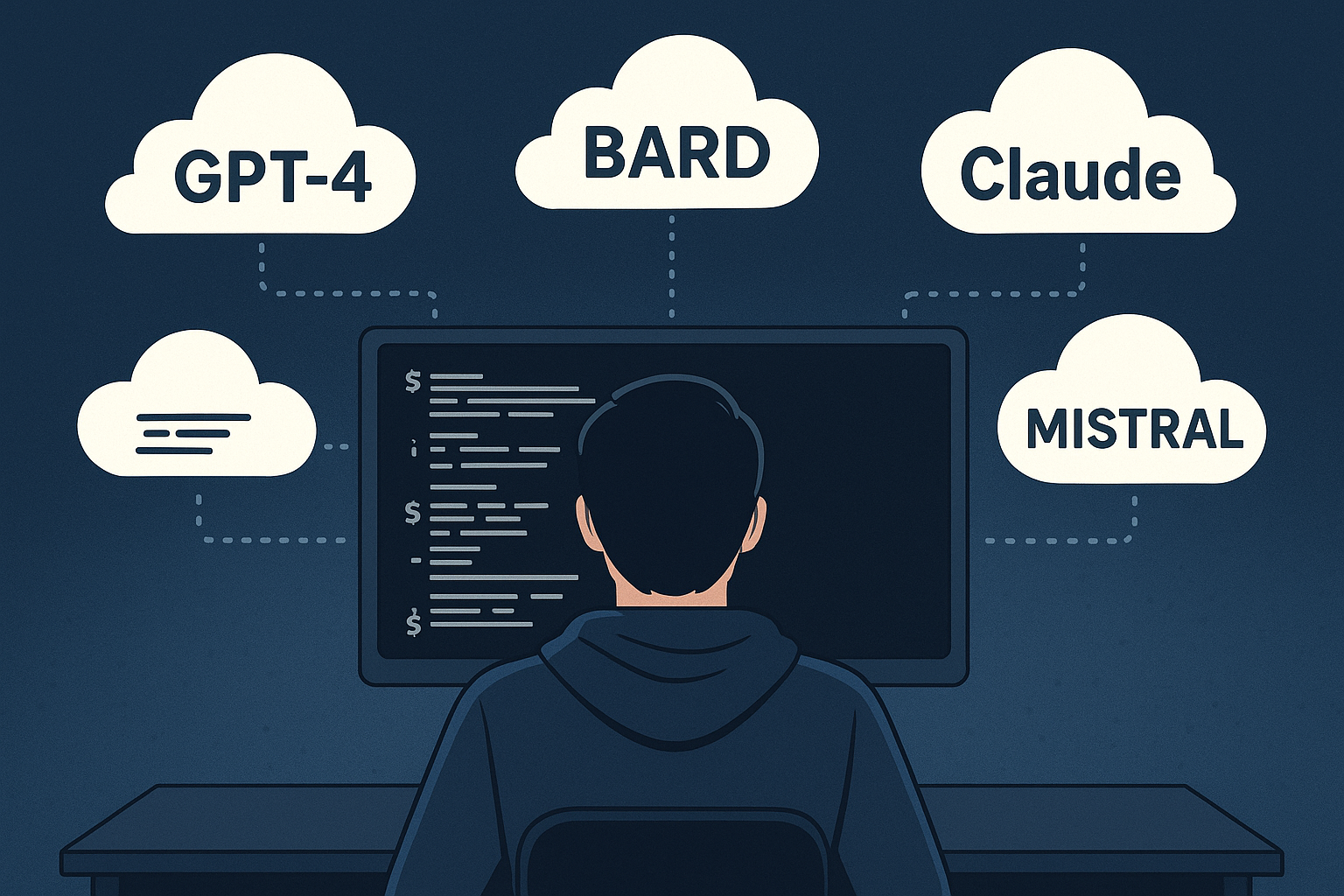
If you’ve been diving into AI development lately, you’ve probably heard a lot about Claude, Anthropic’s powerful, reasoning-focused language model. It’s impressive, no doubt. But here’s a hard truth: you shouldn’t spend your time memorizing “Claude code” or tying your workflow exclusively to one model’s quirks.
Why? Because technology evolves faster than loyalty lasts.
Instead of marrying a specific AI tool, whether it’s Claude, GPT, Gemini, or Llama, focus on what actually gives you long-term power: the foundational concepts underneath.
1. Understand the Core Concepts
Deep learning, transformers, attention mechanisms, tokenization, fine-tuning vs. prompting, these aren’t just buzzwords. They’re the levers you’ll use to adapt when the next big model drops. Knowing why a model behaves a certain way helps you debug, optimize, and even anticipate limitations, regardless of the API you’re calling.
2. Master Evaluation, Not Just Implementation
Anyone can copy-paste a prompt that works with Claude today. But can you measure whether it’s working well? Learn key evaluation metrics:
- Accuracy, precision, recall (for classification)
- ROUGE, BLEU, METEOR (for generation)
- Latency, cost, and token efficiency
- Human-in-the-loop validation strategies
These skills transfer across models, platforms, and even problem domains.
3. Treat Models as Interchangeable Tools
Use Claude? Great, but structure your code so swapping it for GPT-4 or an open-source alternative (like Mistral or Llama 3) takes minutes, not weeks. Abstract your interface:
class LLMClient:
    def generate(self, prompt: str) -> str:
        ...
Now your business logic stays clean, and your stack stays agile.
4. Stay Model-Agnostic in Your Thinking
The best AI engineers aren’t “Claude experts” or “GPT whisperers.” They’re problem solvers who know how to leverage the right tool for the job, today, tomorrow, and five years from now.
Claude might be your favorite today. But if you’ve built your knowledge on deep learning fundamentals, evaluation rigor, and flexible architecture, you’ll thrive no matter what replaces it next.
So don’t learn “Claude code.”
Learn how to think like an AI engineer.
And then, use every model, including Claude, as the powerful but temporary tool it really is.